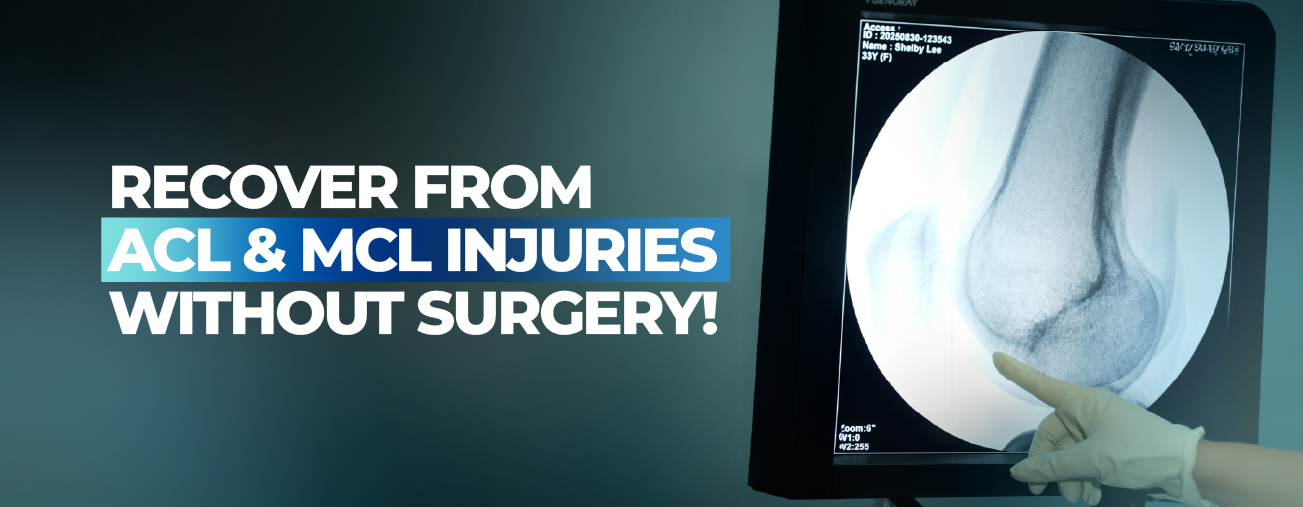
ACL and MCL injuries are among the most feared diagnoses in sports medicine — and for good reason. The knee is unstable, the pain is significant, and the conventional next step is often surgery. But not every knee ligament injury requires an operation. Understanding which injuries can heal without surgery, and which genuinely cannot, is the most important thing you can do before committing to any treatment path.
This article covers the clinical differences between ACL and MCL injuries, which cases are realistic candidates for non-surgical recovery, and where regenerative medicine fits into the picture — including what PRP can and cannot do for torn ligaments.
ACL vs. MCL: Why They Heal Differently
The ACL (anterior cruciate ligament) and MCL (medial collateral ligament) are structurally different in one critical way: blood supply. The MCL runs along the outside of the knee joint capsule and has a rich blood supply. That blood supply is why MCL tears have a high natural healing capacity — repair cells can reach the damaged tissue efficiently, and the ligament can regenerate with appropriate conservative management in most cases.
The ACL runs inside the knee joint and is bathed in synovial fluid rather than surrounded by tissue with robust blood supply. When the ACL tears, the synovial environment washes away the fibrin clot that normally forms the scaffold for healing. This is the primary reason complete ACL tears have very limited capacity to heal spontaneously — there’s no biological scaffolding for the repair to occur on.
This distinction matters enormously for treatment. MCL and ACL injuries are often discussed together, but their healing biology is fundamentally different — and so are their treatment options.
MCL Injuries: Most Heal Without Surgery
MCL tears are graded on a scale of one to three based on severity. Grade 1 tears involve micro-tears in the ligament fibers with the ligament intact. Grade 2 tears involve partial disruption with some remaining integrity. Grade 3 tears are complete ruptures.
Grade 1 and Grade 2 MCL tears almost always heal successfully without surgery. The typical protocol involves a hinged knee brace to protect the ligament, controlled activity modification to avoid valgus stress on the knee, physical therapy to maintain quad and hamstring strength, and gradual return to activity over 4 to 12 weeks depending on severity.
Even most Grade 3 MCL tears respond well to conservative management, particularly when the ACL is intact. The exceptions are MCL tears at the tibial attachment that retract upward (meniscotibial tears) and cases where the knee gaps open under valgus stress in full extension — both indicate the ligament cannot re-approximate and heal without intervention.
ACL Injuries: An Honest Assessment of Non-Surgical Options
Complete ACL tears in athletic, active patients typically require surgical reconstruction to restore the stability needed for cutting, pivoting, and high-demand sport participation. This is the medical reality — and any provider who promises complete ACL regeneration through injections alone without acknowledging this is overpromising.
That said, non-surgical management of ACL injuries is genuinely appropriate in several specific scenarios:
Partial ACL Tears
Partial tears — where some ACL fibers remain intact — have meaningful healing potential, particularly when the tear pattern is favorable on MRI. Extrasynovial tears and tears with well-aligned fiber ends have documented cases of natural healing with conservative management. Regenerative therapy can support this process significantly.
Older or Less Active Patients
Patients over 50 with lower physical demands, or those whose activity goals don’t include pivoting sports, can often function well with a reconstructed neuromuscular program and a stable knee brace. ACL reconstruction surgery for a 65-year-old whose goal is walking, cycling, and swimming has a different risk-benefit equation than the same surgery for a 25-year-old soccer player.
Post-Surgical Augmentation
For patients who have had ACL reconstruction and want to optimize healing, regenerative therapy plays a valuable adjunctive role — supporting graft integration and reducing the inflammation that slows recovery.
Where PRP and Regenerative Medicine Fit In
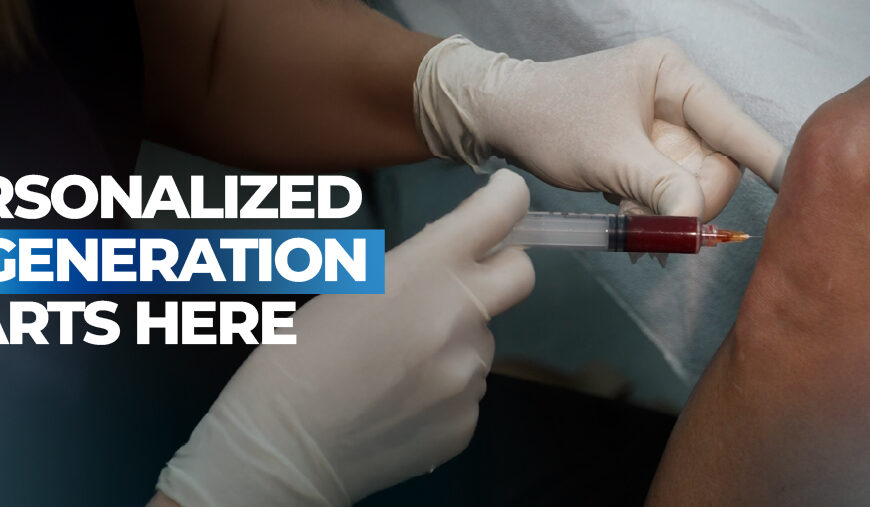
PRP therapy for knee ligament injuries works by delivering concentrated growth factors directly into the damaged tissue. For MCL injuries, PRP accelerates the natural healing process — the growth factors in PRP (PDGF, TGF-β, VEGF) stimulate collagen synthesis, improve blood vessel formation, and reduce chronic inflammation that can stall healing. Multiple studies show PRP for MCL injuries reduces recovery time and improves early functional outcomes compared to conservative management alone.
For partial ACL tears, PRP is more complex but promising. The synovial environment that limits spontaneous ACL healing also limits PRP’s effectiveness in complete tears — the growth factors can be washed away before they have time to act. For partial tears with favorable anatomy, however, PRP can support the remaining fiber integrity and promote healing of the partially damaged tissue.
Stem cell therapy represents the most biologically advanced option for ligament healing. Mesenchymal stem cells have the ability to differentiate into ligament-like tissue and release signaling molecules that modulate the synovial environment. Research on stem cells for ACL healing is more advanced than for PRP, with studies showing improved ligament tissue formation in partial tears treated with stem cell injections.
Non-Surgical Recovery: What a Realistic Plan Looks Like
Whether you’re recovering from an MCL tear or managing a partial ACL injury without surgery, the recovery framework follows a similar progression:
Phase 1 — Protection and Swelling Control (Weeks 1 to 3)
A hinged knee brace limits harmful movement while allowing controlled range of motion. Ice, compression, and elevation reduce acute swelling. Weight-bearing is introduced gradually based on pain and stability. PRP can be administered during this phase to amplify the healing signal during the critical early repair window.
Phase 2 — Strength and Range of Motion (Weeks 3 to 8)
Physical therapy focuses on restoring full knee extension and flexion, rebuilding quad and hamstring strength, and reestablishing neuromuscular control. Single-leg balance, closed-chain exercises, and progressive loading are introduced. Shockwave therapy can address any residual scar tissue or tendon tightness that develops around the injured ligament.
Phase 3 — Functional Return (Weeks 8 to 16+)
Sport-specific training, agility work, and progressive return to full activity. MRI reassessment at 3 to 6 months confirms healing progression. For athletes returning to pivoting sports after non-surgical ACL management, functional bracing during competition reduces re-injury risk.
When Surgery Is the Right Answer
Non-surgical management is not appropriate for all ACL and MCL injuries. Surgery should be the primary recommendation when:
- Complete ACL tear in a young, active patient who wants to return to pivoting and cutting sports
- Combined ACL and MCL tear with significant instability on examination
- MCL tears at the tibial attachment with retraction, or those showing valgus gapping in full extension
- Associated meniscus tear requiring repair alongside ligament reconstruction
- Failed conservative management with persistent instability after 3 to 6 months
Being honest about when surgery is necessary is part of how we approach every evaluation. We don’t recommend regenerative therapy when surgical reconstruction is the medically appropriate answer — and we don’t recommend surgery when regenerative and conservative management offer a viable path to recovery.
ACL and MCL Injury Treatment in Orlando
At Regenerative Sport, Spine & Spa, located at 10920 Moss Park Rd Suite 218, Orlando, FL 32832, Dr. Manuel Colón and Dr. Dana Kleinman evaluate every knee ligament injury with current MRI, a stability examination, and a full history of activity goals and prior treatment. The recommendation comes from that clinical picture — not a default protocol.
If you’ve been told surgery is your only option after an ACL or MCL injury — or if you’re looking for a second opinion on whether regenerative therapy is appropriate for your specific tear — contact our team at 888-557-5682 to schedule a consultation.
You can also read more about how PRP helps athletes recover from sports injuries, our knee pain treatment options, and stem cell therapy for knee conditions.
Frequently Asked Questions
Can an ACL tear heal without surgery?
It depends on the type and severity of the tear. Complete ACL tears in young, active patients who want to return to pivoting and cutting sports almost always require surgical reconstruction — the ACL’s limited blood supply prevents spontaneous healing of complete tears. However, partial ACL tears, ACL injuries in older or less active patients, and certain favorable tear patterns on MRI can heal successfully with conservative management and regenerative therapy. Current MRI and a clinical stability examination are the tools that determine which category you’re in.
Can an MCL tear heal without surgery?
Yes, in most cases. The MCL has a rich blood supply outside the joint capsule, giving it strong natural healing capacity. Grade 1 and Grade 2 MCL tears almost always heal successfully with conservative management — bracing, physical therapy, and controlled activity modification over 4 to 12 weeks. Even most Grade 3 (complete) MCL tears respond well to non-surgical treatment when the ACL is intact. Surgery is typically only needed for tears at the tibial attachment that retract, or cases with significant valgus instability in full extension.
Does PRP help with ACL or MCL injuries?
For MCL injuries, PRP clearly accelerates healing — growth factors stimulate collagen synthesis and improve early functional recovery compared to conservative management alone. For partial ACL tears, PRP can support remaining fiber integrity and promote tissue repair in favorable cases. For complete ACL tears, PRP’s role is more limited because the synovial environment can wash away growth factors before they act. PRP is most useful as an adjunct during post-surgical ACL reconstruction recovery, where it supports graft integration and reduces recovery time.
How long does it take to recover from an MCL injury without surgery?
Grade 1 MCL tears typically resolve in 2 to 4 weeks with appropriate management. Grade 2 tears take 4 to 8 weeks. Grade 3 tears can take 8 to 16 weeks for full recovery, depending on severity and rehabilitation compliance. PRP therapy during the early phase can reduce these timelines meaningfully — particularly for Grade 2 and 3 injuries where the healing response needs amplification. Return to sport is guided by functional testing — pain-free strength, stability, and sport-specific movement — not just time elapsed.
What happens if you don’t treat an ACL tear?
An untreated complete ACL tear leaves the knee chronically unstable. Over time, that instability accelerates cartilage wear and increases the risk of meniscus tears with normal activity — because the knee is absorbing forces without the ligamentous control the ACL provides. For active patients who continue sports without treatment, secondary knee injuries are common. For sedentary or lower-demand patients, many manage without surgery indefinitely — but knee degeneration over the long term is a real risk that should be factored into the decision.