A PRP injection uses your own blood to accelerate healing — but what is actually happening inside the tissue once that injection is delivered? Most patients understand the procedure: blood draw, centrifuge, injection. Fewer understand the biology that makes it work. That biology is worth knowing, because it explains why PRP succeeds where cortisone fails, why timing matters, and what realistic outcomes look like for different conditions.
This article breaks down the science of platelet-rich plasma therapy — what platelets are, what growth factors do, and how the healing process actually unfolds at the tissue level.
What Are Platelets and What Do They Normally Do?
Platelets are small, anucleate cell fragments — they have no nucleus — produced in the bone marrow and circulating in your blood. Their primary job in normal physiology is to respond to injury. When tissue damage occurs, platelets are among the first cells recruited to the site. They aggregate to form a clot, which stops bleeding, and then release the contents of their internal granules — proteins and signaling molecules that initiate the next phase of healing.
In whole blood, platelets circulate at roughly 150,000 to 400,000 per microliter. That concentration is sufficient for normal wound healing in well-vascularized tissues like skin and muscle. It’s often insufficient for tendons, ligaments, cartilage, and intervertebral discs — structures with poor blood supply that can’t recruit adequate platelet concentrations through normal circulation.
PRP concentrates platelets five to ten times above baseline — producing solutions with 1,000,000 to 4,000,000 platelets per microliter — and delivers that concentration directly into the damaged tissue. The result is a local healing signal far more intense than what the body can produce on its own through the bloodstream.
What Growth Factors Does PRP Release?
When platelets activate at the injection site, they degranulate — releasing the proteins stored in their alpha granules. These proteins are the biological mechanism behind PRP’s therapeutic effects. The key growth factors include:
Platelet-Derived Growth Factor (PDGF)
PDGF stimulates cell proliferation and migration — it recruits fibroblasts, smooth muscle cells, and stem cells to the repair site. It also promotes the formation of new blood vessels (angiogenesis), which improves blood supply to the treated area over time. Better blood supply means better long-term healing capacity.
Transforming Growth Factor Beta (TGF-β)
TGF-β is the primary driver of collagen synthesis in tendons and ligaments. It stimulates fibroblasts to produce Type I collagen — the structural protein that gives tendons their tensile strength. For tendinopathy, where collagen organization has broken down, TGF-β is one of the most critical growth factors in the healing cascade.
Vascular Endothelial Growth Factor (VEGF)
VEGF drives angiogenesis — the formation of new capillaries into the treated tissue. For structures that are poorly vascularized to begin with, this is particularly valuable. New blood vessel formation improves oxygen delivery, waste removal, and the ongoing transport of repair cells to the healing site.
Insulin-Like Growth Factor 1 (IGF-1)
IGF-1 promotes cell survival, protein synthesis, and muscle repair. In joint and cartilage applications, it supports chondrocyte (cartilage cell) function and reduces the catabolic signals that drive cartilage breakdown in osteoarthritis.
Fibroblast Growth Factor (FGF)
FGF stimulates fibroblast proliferation and tissue remodeling. It plays a key role in the later stages of healing — the phase where new tissue is reorganized and strengthened into a functional structure rather than just scar tissue.
Epidermal Growth Factor (EGF)
EGF promotes cell proliferation and differentiation across multiple tissue types. In skin and soft tissue applications — including aesthetic PRP treatments — EGF drives the regeneration of epidermal and connective tissue cells.
How PRP Differs From Cortisone: The Key Distinction
Cortisone (corticosteroid injection) suppresses inflammation by blocking inflammatory signaling pathways. It reduces pain quickly — often within days — because inflammation is the immediate source of most pain. But inflammation is also part of how healing begins. Suppress it aggressively and repeatedly, and you interrupt the repair cascade that the body needs to fix the underlying damage.
Repeated cortisone injections into tendons have been shown in multiple studies to cause collagen breakdown, reduce the mechanical strength of the tendon, and increase the risk of rupture. The short-term benefit comes at a structural cost.
PRP therapy works through the opposite mechanism. Rather than suppressing the inflammatory response, it modulates it — delivering the growth factors that direct inflammation toward productive tissue repair rather than chronic destructive inflammation. The initial post-injection soreness patients experience is actually the PRP activating a controlled healing response. That’s why NSAIDs should be avoided after PRP: taking anti-inflammatories after the injection blunts the very process the treatment is designed to initiate.
You can read our full comparison of PRP vs cortisone for a detailed breakdown of outcomes across conditions.
The Three Phases of Healing That PRP Activates
Phase 1 — Inflammatory Phase (Days 1 to 5)
Immediately after injection, platelets activate and release their growth factors. Local inflammation increases as repair cells are recruited to the site. Patients typically experience increased soreness during this phase — this is expected and indicates the treatment is working. The inflammatory phase creates the biological environment necessary for the next phase to begin.
Phase 2 — Proliferative Phase (Weeks 2 to 6)
Fibroblasts and other repair cells proliferate and begin producing new collagen and extracellular matrix. New blood vessels form. The tissue is actively rebuilding, though it isn’t yet structurally strong. Most patients begin noticing reduced pain and improved function during this phase — typically four to six weeks after injection.
Phase 3 — Remodeling Phase (Weeks 6 to 52)
New collagen organizes into functional tissue architecture. Tensile strength improves progressively. In tendons, the collagen fibers align along lines of mechanical stress — a process guided by appropriate loading during rehabilitation. This is why progressive return to activity after PRP isn’t just permitted but important: mechanical loading is part of how the tissue matures into a functional structure.
Full remodeling takes 6 to 12 months. Results continue improving throughout this period — which is why the final outcome of PRP therapy shouldn’t be judged at six weeks.
What Affects PRP Quality and Effectiveness
Not all PRP is equivalent. Several variables determine whether a PRP preparation has therapeutic concentration:
- Centrifuge protocol — spin speed and duration determine the platelet concentration achieved. Standardized protocols produce consistent results; improvised ones don’t.
- Leukocyte content — whether white blood cells are included (leukocyte-rich PRP) or removed (leukocyte-poor PRP) affects the inflammatory profile of the injection. Different conditions respond better to different formulations.
- Patient baseline platelet count — patients with lower baseline platelet counts produce less concentrated PRP from the same volume of blood.
- Injection precision — ultrasound guidance ensures the PRP reaches the damaged tissue rather than the surrounding healthy structures. Placement accuracy is one of the biggest differentiators between providers.
- NSAID avoidance — taking anti-inflammatories before or after injection reduces platelet function and degranulation, directly diminishing the therapeutic dose.
PRP at Regenerative Sport, Spine & Spa in Orlando
At Regenerative Sport, Spine & Spa, located at 10920 Moss Park Rd Suite 218, Orlando, FL 32832, every PRP preparation uses standardized centrifuge protocols, and every injection is performed under ultrasound guidance by Dr. Manuel Colón or Dr. Dana Kleinman. Treatment is selected based on your specific diagnosis — the appropriate PRP formulation, injection sites, and session protocol are determined by what your imaging and clinical evaluation show, not a default protocol.
Contact our team at 888-557-5682 to schedule a consultation and find out whether PRP therapy is the right option for your condition.
To explore specific applications, read about PRP for back pain, PRP for neck and shoulder pain, PRP for sports injuries, and how PRP compares to stem cell therapy.
Frequently Asked Questions
What is a PRP injection?
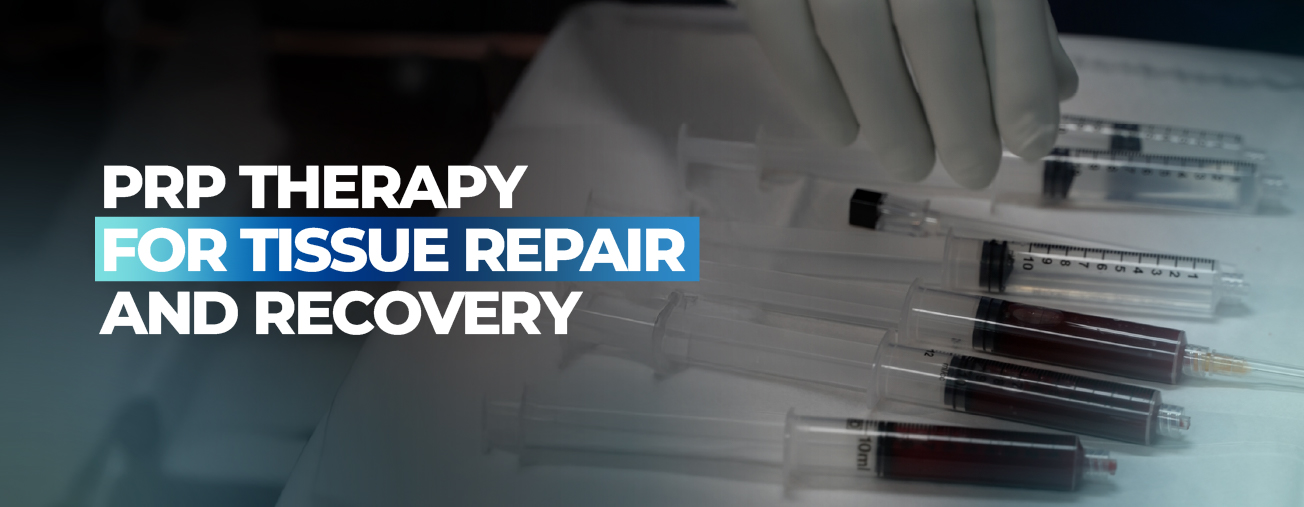
A PRP injection delivers platelet-rich plasma — a concentrated solution of your own platelets — directly into damaged tissue. Blood is drawn from your arm, spun in a centrifuge to isolate and concentrate the platelets, and then injected under imaging guidance into the target area. The concentrated platelets release growth factors that stimulate tissue repair, collagen synthesis, and new blood vessel formation at the injection site. The entire procedure takes 45 to 60 minutes and uses only your own biological material.
How does PRP work to heal tissue?
PRP activates a three-phase healing response. In the first phase (days 1 to 5), platelets release growth factors including PDGF, TGF-β, VEGF, IGF-1, and FGF that recruit repair cells and initiate healing. In the second phase (weeks 2 to 6), fibroblasts proliferate and produce new collagen while new blood vessels form — this is when pain begins to reduce. In the third phase (weeks 6 to 52), new tissue remodels into a functional structure with improved mechanical strength. Full results develop over 6 to 12 months.
What is the difference between PRP and cortisone?
Cortisone suppresses inflammation to reduce pain quickly, but doesn’t repair the underlying tissue damage and can weaken tendons with repeated use. PRP modulates inflammation toward productive tissue repair by delivering the growth factors that direct healing rather than suppressing it. Cortisone provides faster initial relief; PRP produces more durable results because it addresses the structural cause. For chronic conditions where patients keep returning for cortisone every few months, PRP addresses the root problem cortisone leaves untouched.
Why does PRP cause soreness after injection?
Post-injection soreness is a normal and expected part of the healing response. When platelets activate and release growth factors, they initiate a controlled inflammatory response — the biological signal that recruits repair cells to the site. That inflammation causes temporary soreness, typically lasting 2 to 5 days. It indicates the treatment is working. This is also why NSAIDs should be avoided after PRP: anti-inflammatory medications suppress the very response the injection is designed to trigger.
Does platelet concentration affect how well PRP works?
Yes. The therapeutic threshold for PRP is generally considered to be at least 1,000,000 platelets per microliter — roughly five times the concentration found in whole blood. Below that threshold, the growth factor dose delivered to the tissue may be insufficient to produce meaningful healing stimulation. Concentration depends on the centrifuge protocol used, the volume of blood drawn, and the patient’s baseline platelet count. Providers using standardized, validated centrifuge protocols consistently achieve therapeutic concentrations; improvised protocols may not.