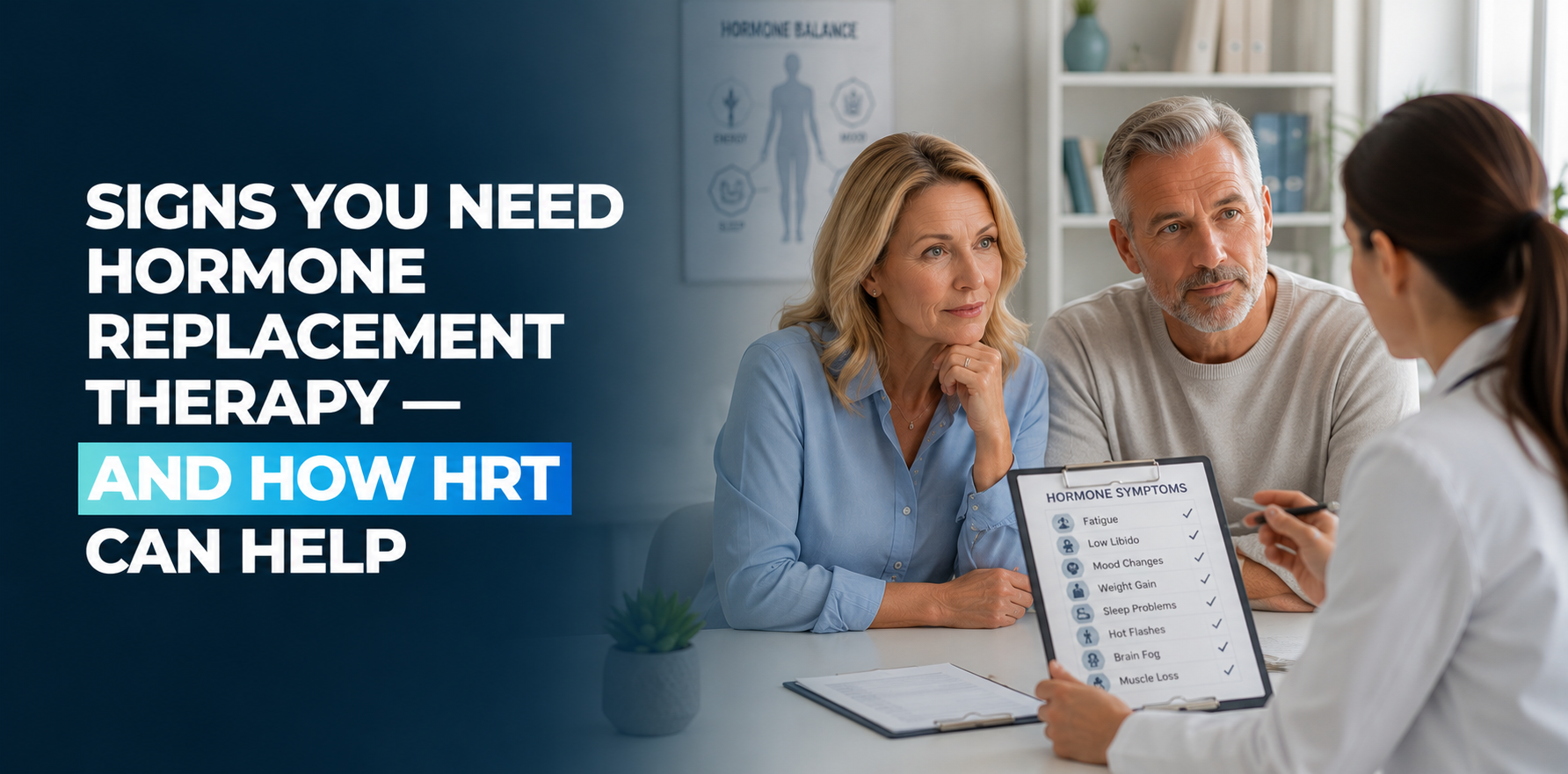
Knowing what are the signs that you need hormone replacement therapy is harder than it sounds. The symptoms of hormonal imbalance — fatigue, weight gain, poor sleep, low sex drive, mood changes — overlap with a dozen other conditions and with what most people write off as “just getting older.” That’s exactly why so many people spend years feeling progressively worse before anyone checks their hormone levels.
This article covers the specific signs that suggest hormonal imbalance in both men and women, how hormone replacement therapy works, and what the process looks like — so you can have an informed conversation with a provider instead of guessing.
Signs You May Need Hormone Replacement Therapy
These symptoms don’t confirm a hormonal imbalance on their own — only lab work does. But they are the patterns that consistently show up in patients who turn out to have low estrogen, low testosterone, or broader hormonal disruption. If several of these apply to you, that’s a reason to get your levels tested.
Persistent Fatigue That Doesn’t Improve With Rest
This is the most common complaint. Not tired-after-a-long-day fatigue — the kind that’s there when you wake up, doesn’t respond to sleep, and gets progressively worse over time. Both low estrogen in women and low testosterone in men reduce energy production at the cellular level. When thyroid hormones are also suboptimal, the fatigue compounds further. Rest doesn’t fix a hormonal deficiency; it just delays recognizing it.
Unexplained Weight Gain, Especially Around the Abdomen
When your diet and exercise habits haven’t changed but your body composition has, hormones are often the explanation. Declining estrogen in women shifts fat storage toward the abdomen. In men, low testosterone reduces muscle mass and increases body fat simultaneously. Cortisol dysregulation — common when other hormones are out of balance — amplifies this effect. The result is weight gain that doesn’t respond to caloric restriction the way it should.
Hot Flashes and Night Sweats
These are the most recognizable signs of declining estrogen in women during perimenopause and menopause. The hypothalamus — which regulates body temperature — becomes dysregulated when estrogen drops, triggering sudden heat episodes during the day and at night. Night sweats in particular disrupt sleep quality and create a secondary fatigue problem that compounds the primary one. Men can also experience hot flashes when testosterone drops significantly.
Mood Changes, Irritability, and Depression
Estrogen and testosterone both influence neurotransmitter activity — including serotonin, dopamine, and GABA. When levels drop, mood regulation deteriorates. Women in perimenopause often describe a short temper, anxiety, and low-grade depression that feels different from what they’ve experienced before. Men with low testosterone report similar patterns, particularly a flattening of motivation and emotional range. These symptoms are frequently treated with antidepressants without ever checking hormone levels — which misses the root cause.
Sleep Disruption
Difficulty falling asleep, waking at 2 or 3 AM and being unable to return to sleep, or waking unrefreshed despite adequate hours — all are common hormonal symptoms. Estrogen promotes restorative sleep; its decline disrupts sleep architecture. Progesterone has a calming, sleep-promoting effect that also diminishes during perimenopause. In men, low testosterone correlates with sleep apnea and lighter, less restorative sleep.
Low Libido and Sexual Changes
A gradual decline in sex drive that you’ve accepted as normal is worth questioning. Estrogen and testosterone are both essential to libido in men and women. In women, declining estrogen also causes vaginal dryness and tissue thinning that makes intercourse uncomfortable — a problem that has a straightforward solution but often goes unaddressed because patients are embarrassed to bring it up. In men, low testosterone reduces both drive and function.
Brain Fog and Memory Problems
Difficulty concentrating, forgetting words mid-sentence, a general sense that your thinking is slower — these are documented effects of hormonal decline. Estrogen protects cognitive function; its loss during menopause produces measurable changes in brain activity. Research has shown these aren’t imagined symptoms — MRI studies confirm changes in brain matter during the early menopausal transition. The brain fog most women report is real and often responds to HRT.
Muscle Loss and Bone Density Decline
Testosterone drives muscle synthesis in both men and women. Estrogen regulates bone metabolism and prevents the accelerated bone loss that follows menopause. When these hormones decline, muscle mass decreases and bone density drops — increasing fracture risk. These are the longer-term consequences of untreated hormonal imbalance that are harder to reverse once they’ve progressed.
HRT for Women: What It Does
Hormone replacement therapy for women typically replaces estrogen, progesterone, or both — depending on whether the uterus is intact and what the clinical picture shows. For women who have had a hysterectomy, estrogen alone is often prescribed. For women with an intact uterus, progesterone is added to protect the uterine lining.
HRT is available in several forms: patches, gels, creams, oral tablets, vaginal preparations, and pellets implanted under the skin. Delivery method affects how hormones are absorbed and metabolized, and the right choice depends on your symptoms, medical history, and personal preference.
Bioidentical hormones — which are chemically identical to the hormones your body produces naturally — are an option for women who prefer a more natural approach or who have had difficulty tolerating synthetic hormones. At our practice, we discuss bioidentical hormone therapy for patients who are good candidates.
HRT for Men: Testosterone Replacement
Men’s hormone replacement therapy centers primarily on testosterone. Testosterone levels peak in a man’s early twenties and decline roughly 1% per year after age 30. By 50, many men have levels significantly below what they need for optimal function — but because the decline is gradual, the symptoms often go unrecognized.
Testosterone replacement therapy (TRT) is FDA-approved for men with hypogonadism — a diagnosed condition where the body fails to produce adequate testosterone. It’s available as injections, topical gels, patches, and pellets. When prescribed appropriately and monitored correctly, TRT improves energy, libido, muscle mass, mood, and cognitive function in men with confirmed deficiency.
One important distinction: a low-normal testosterone level without symptoms doesn’t automatically call for treatment. The clinical picture — symptoms plus lab values — guides the decision. Self-medicating with testosterone without medical supervision is dangerous. Regular monitoring of red blood cell counts, prostate-specific antigen, and other markers is essential while on TRT.
HRT and Weight Loss
Hormone replacement therapy and weight management are directly connected, though HRT is not a weight loss treatment by itself. What it does is remove a hormonal barrier that makes weight loss unusually difficult.
When estrogen or testosterone deficiency is driving abdominal fat accumulation and muscle loss, standard diet and exercise interventions produce less than expected results. Restoring hormone balance corrects the underlying metabolic disruption — making the body respond to lifestyle interventions the way it should. Most patients on HRT don’t lose weight automatically, but they find that healthy habits finally produce the results they weren’t getting before.
How We Approach HRT in Orlando
At Regenerative Sport, Spine & Spa in Lake Nona, Orlando, Dr. Manuel Colón and Dr. Dana Kleinman evaluate hormone levels as part of a broader picture of your health — not in isolation. Before recommending any hormone therapy, we run a complete panel, review your symptom history, and rule out other contributing factors.
We offer hormone replacement therapy for both men and women, including bioidentical hormone options. Treatment plans are individualized, monitored, and adjusted as your levels and symptoms change. We don’t apply a one-size-fits-all protocol.
If you’ve been living with fatigue, weight changes, mood disruption, or other symptoms that haven’t responded to conventional approaches, contact our team to schedule a hormone evaluation. A simple blood test is the starting point. From there, we build a plan based on what your labs and your symptoms actually show.
You can also read about how hormones affect weight loss and explore our full range of regenerative and wellness treatments.
Frequently Asked Questions
What are the signs that you need hormone replacement therapy?
The most common signs are persistent fatigue that doesn’t improve with rest, unexplained weight gain particularly around the abdomen, hot flashes or night sweats, mood changes including irritability or depression, disrupted sleep, low libido, brain fog, and gradual muscle loss. These symptoms appear in both men and women with hormonal decline, though the specific hormones involved differ. The only way to confirm hormonal imbalance is through lab testing — symptoms alone aren’t enough to start treatment, but they’re a clear reason to get tested.
Does hormone replacement therapy help with weight loss?
HRT removes a hormonal barrier to weight management rather than causing direct weight loss. When declining estrogen or testosterone is driving abdominal fat accumulation and muscle loss, restoring those levels corrects the metabolic disruption. Most patients find that diet and exercise work the way they should once hormone levels are optimized — producing results they weren’t seeing before, not automatic weight loss without effort.
How much does hormone replacement therapy cost?
HRT costs vary based on the type of therapy, delivery method, and monitoring frequency. Initial consultations and lab work typically run $150 to $400. Ongoing therapy — whether gels, patches, injections, or pellets — ranges from roughly $30 to $500 per month depending on the formulation and dosage. Bioidentical hormone therapy and pellets tend to cost more than standard formulations. Some insurance plans cover HRT for specific diagnoses; others don’t. Checking your coverage before starting is worth the phone call.
Is hormone replacement therapy covered by insurance?
Coverage varies significantly by plan and diagnosis. Many insurance plans cover FDA-approved hormone therapies for menopause symptoms and diagnosed hypogonadism in men. Bioidentical compounded hormones are frequently not covered because they aren’t FDA-approved products. Lab work for initial evaluation is usually covered. The safest approach is to call your insurer before your first appointment and confirm what’s covered under your specific plan.
What is bioidentical hormone replacement therapy?
Bioidentical hormones are chemically identical to the hormones your body produces naturally — the same molecular structure as estradiol, progesterone, or testosterone. They’re derived from plant sources and compounded or manufactured to match the body’s own hormones exactly. Some FDA-approved products are bioidentical. Compounded bioidentical hormones — custom-mixed by a compounding pharmacy — are not FDA-approved as finished products, though the individual hormones used are regulated. Many patients prefer them for perceived tolerability, but the evidence base comparing them to standard HRT is still developing.
Can men benefit from hormone replacement therapy?
Yes. Men with confirmed low testosterone — diagnosed through symptoms plus lab testing — can see significant improvements in energy, libido, muscle mass, mood, and cognitive function with testosterone replacement therapy. Testosterone levels decline about 1% per year after age 30, and by midlife many men have levels low enough to cause real quality-of-life impact. TRT requires regular monitoring and isn’t appropriate for men with prostate cancer, untreated heart failure, or certain other conditions. A low testosterone number alone without symptoms doesn’t automatically indicate treatment — the clinical picture guides the decision.